In dit artikel leggen de leden van de DDMA Commissie Digital Marketing Transformation uit wat full funnel marketing inhoudt en lichten zij een KPI-framework dat je praktisch kunt toepassen uit. Ook vind je in dit artikel do’s en dont’s én een succesvol praktijkvoorbeeld. Het artikel is ook verschenen op Emerce.
Van one-size-fits-all naar relevantie
De afgelopen jaren heeft er een shift plaatsgevonden van ‘one-size-fits-all’-achtige push-marketing naar een meer gesegmenteerde en gerichte aanpak. Consumenten zitten niet meer te wachten om advertenties te zien van een product of dienst van een bedrijf waar ze geen gebruik van zullen maken of niet mee geassocieerd willen worden. Sterker nog, het zorgt voor een negatieve merkassociatie met bedrijven die dit wel nog op deze agressieve manier aanpakken.
Capabele marketeers begrijpen dat het belangrijk is om product in de markt te zetten op een specifieke en relevante manier en duidelijk te maken waarom dit zo goed past in het leven van hun doelgroep. Het begrijpen van de mogelijke ‘customer journeys’ die een potentiële klant af kan leggen van bewustzijn naar aankoop is hiervoor een vereiste. Deze verschilt per persoon en per product of dienst. Zo ziet het aankoopproces van een keuken er heel anders uit dan het aankoopproces van een t-shirt.
Full funnel marketing
Nadat een potentiële klant het idee krijgt dat hij mogelijk je product zou willen aanschaffen, heeft hij vaak tijd nodig om zich te oriënteren. Als je jouw marketingstrategie benadert vanuit klantperspectief, dan realiseer je je dat een klant vaak niet direct een actie onderneemt zonder dit oriëntatieproces. Je marketingstrategie moet hier goed op aansluiten. Hoe zorg je ervoor dat een potentiële klant van jouw bedrijf afweet, zich oriënteert en uiteindelijk de aankoop bij jou doet?
Het antwoord is full funnel marketing. Een strategie waarbij je in elke fase van de journey relevant bent als bedrijf en hier ook de juiste kanalen en middelen inzet om je doelgroep te bereiken. Een wereld waarbij de communicatieafdeling een branding-campagne bedenkt en de online marketeers onafhankelijk een performance-campagne optuigen is dus verleden tijd. Het één gaat niet zonder het ander.
Om per fase van de customer journey te bepalen welke middelen en welke communicatieboodschap je gebruikt, zijn er een aantal gangbare modellen die je kunt gebruiken. Van de meer traditionele modellen zoals Touch, Tell, Sell tot moderne modellen als See, Think, Do, Care.
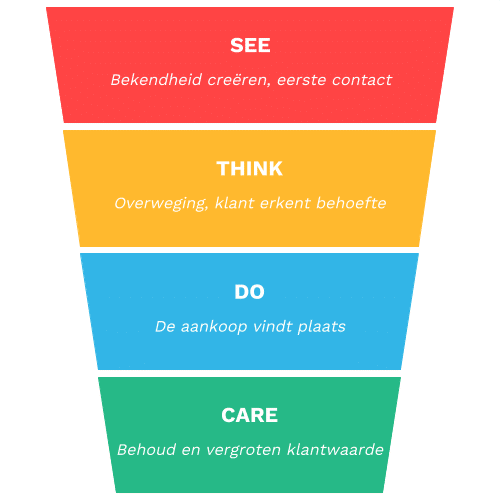
Dergelijke modellen dwingen marketeers om na te denken vanuit de klant. De vraag die centraal dient te staan is ‘Aan welke boodschap heeft mijn (potentiële) klant behoefte in deze specifieke fase van de customer journey en hoe zorg ik ervoor dat mijn boodschap in alle fases op elkaar aansluit?’ Dit laatste onderdeel is vaak onderschat, maar een logische opvolging in communicatieberichten is cruciaal voor het succes van een full funnel marketing-strategie.
KPI-framework voor full funnel marketing
Maar hoe weet je of je boodschap de juiste is en hoe optimaliseer je hierop? Wanneer je puur optimaliseert op performance dan zijn je KPI’s vaak duidelijk. Wanneer je optimaliseert op basis van de customer journey dan zijn er meer KPI’s waar je rekening mee moet houden. Essentieel hiervoor is een KPI-framework. Met een KPI-framework ben je in staat om per fase van de customer journey te bepalen voor welke metrics je optimaliseert en of je marketing inzet succesvol is geweest. Hieronder vind je een voorbeeld van een KPI-framework.
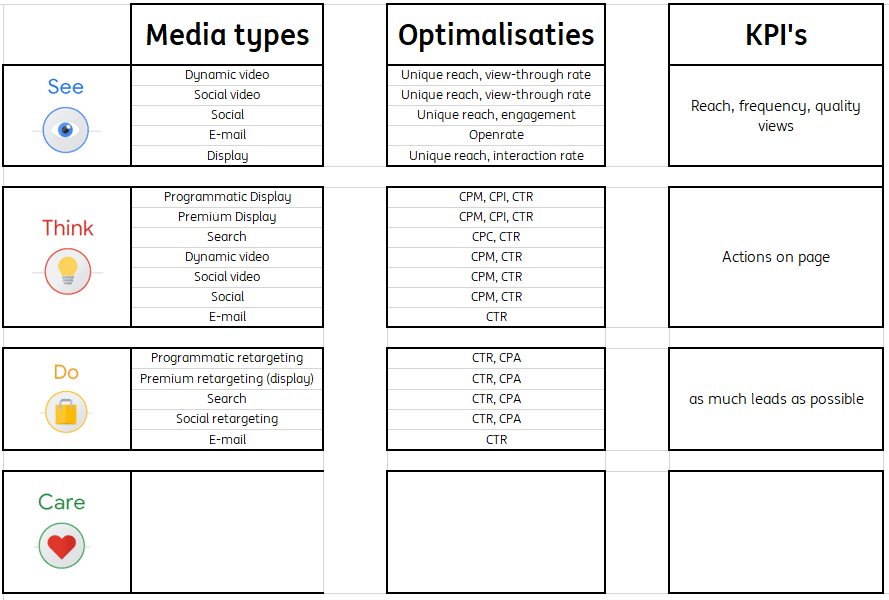
In het KPI-framework staat de belangrijkste KPI geformuleerd – in dit voorbeeld zijn dat leads – maar ook KPI’s die hier direct en indirect aan bijdragen. Elke fase in het model heeft zijn eigen KPI’s waarop gestuurd wordt. Marketing inzet in de See-fase wordt in dit geval bijvoorbeeld niet direct afgerekend op leads, maar wel op hoe er indirect aan wordt bijgedragen. De Care-fase is in dit voorbeeld niet meegenomen.
Do’s en don’ts voor full funnel marketing
Leuk, die theorie, maar hoe realiseer je nou daadwerkelijk een succesvolle full funnel marketingstrategie? Een aantal praktische tips:
Do’s
- Stel per fase (per KPI) een meetbaar target op. Begin vanuit je hoofddoelstelling en reken vervolgens terug wat dit betekent voor de doelstellingen van de fases hoger in de funnel. Zo kun je bijvoorbeeld je salesdoelstelling terugrekenen naar traffic en views.
- Speel in op de behoefte van de (potentiële) klant, afhankelijk van de fase waarin hij of zij zit en stem de content en boodschap hierop af.
- Zorg dat de boodschappen en uitingen voor de verschillende fases goed op elkaar aansluiten
- Hou bij het bepalen van de maximale CPA (Cost Per Acquistion, in de Do-fase) rekening met de initiatieven binnen de campagne die niet direct op sales worden afgerekend (maar wel kosten met zich meebrengen)
Don’ts
- Zorg dat plannen voor full funnel-campagnes niet per fase door verschillende teams worden uitgewerkt
- Focus je bij grootschalige performance-campagnes niet alleen op kanalen die direct converteren. Zonder de juiste aandacht voor upper- en midfunnel-initiatieven zul je waarschijnlijk je hoofddoelstelling niet halen.
- Denk niet dat al je (potentiële) klanten lineair door alle fases van de customer journey lopen, zoals jij het van tevoren bedacht hebt. Hou hier rekening mee in de boodschap in mid- en lowerfunnel-uitingen.
Full funnel marketing in de praktijk
Case: NS – Treinpakkers
De Treinpakkers-campagne van NS bestaat uit voordelige uitjes in combinatie met een treinticket, zoals musea, stedentrips, beurzen, dierentuinen en pretparken. Binnen deze grootschalige campagne worden verschillende marketingdoelstellingen nagestreefd, zoals het vergroten van de bekendheid van deze producten, het creëren van overweging voor het gebruik ervan en (uiteindelijk) de aankoop van de producten. Daarbij werden voorheen al wel verschillende uitingen en kanalen ingezet voor de verschillende marketingdoelstellingen, maar deze initiatieven sloten vaak niet goed op elkaar aan.
In de nieuwe full funnel marketing-aanpak is ervoor gezorgd dat dit veel meer op elkaar is afgestemd. Zo zijn er bijvoorbeeld in de See-fase dynamische video’s ingezet met algemene informatie over Treinpakkers. Consumenten die deze video hebben uitgekeken, kregen vervolgens enkele dagen later video’s en banners te zien met informatie over specifieke Treinpakkers-deals (Think-fase). Degenen die deze video’s uitkeken of klikten op de banners werden vervolgens geretarget met meer salesgerichte banners over een specifiek product (Do-fase).
Dit heeft onder meer geresulteerd in een significante stijging van Treinpakkers-aankopen en daling van de CPA van de ads die ingezet werden, vergeleken met eerdere campagnes die op een meer traditionele manier werden ingezet.
Hoe nu verder
Met het bovengenoemde framework, de do’s & dont’s en de voorbeeldcase kun je aan de slag met full funnel marketing. Ons advies: gewoon beginnen. Start klein en ga vervolgens aan de hand van inzichten langzaam campagnes uitbouwen, budgetten anders verdelen en je interne stakeholders meenemen. Dit zorgt voor een hogere ROI uit je marketinguitgaven, intern voor een goede teamspirit en natuurlijk meer relevantie richting jouw doelgroep. Want dat is wat je uiteindelijk wil bereiken: de klant altijd in de juiste context én op het juiste moment raken.
Op donderdag 5 maart organiseert de commissie Digital Marketing Transformation een Afternoon Update over de impact van marketplaces. Er zijn nog maar een paar plekken beschikbaar!

Kevin Steba
DDMA Decision Makers Breakfast: De AI-gedreven organisatie – van experiment naar klantgerichte transformatie
Een gesprek voor wie aan de knoppen zit
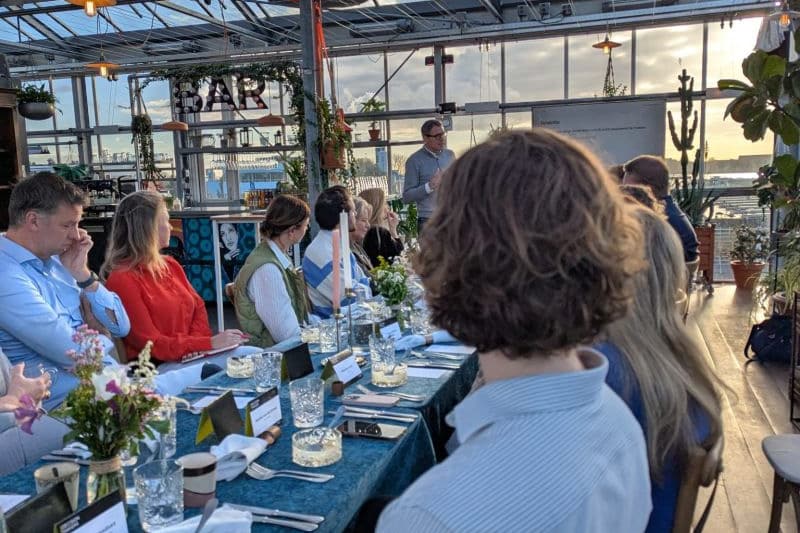
Deze editie staat in het teken van De AI-gedreven organisatie – van experiment naar klantgerichte transformatie. Want nu AI op steeds meer plekken de experimenteerfase voorbij is, verschuift ook de discussie. Niet langer alleen naar wat er technisch mogelijk is, maar vooral naar de vraag hoe je AI daadwerkelijk organiseert. Wat verandert er aan teams, rollen en leiderschap? En hoe voorkom je dat AI vooral iets blijft waarover veel wordt gepraat en gepresenteerd, maar dat in de dagelijkse praktijk maar moeizaam van de grond komt?
Tijdens de lunch combineren we opnieuw een breder perspectief met de praktijk.
Aaron Mirck, keynote speaker op DDMA NEXT, kijkt voorbij de inmiddels bekende efficiencywinst van AI. Want als iedereen straks over dezelfde technologie beschikt, zit het onderscheid niet in wat je ermee kunt automatiseren, maar in wat je ermee weet toe te voegen. Hoe zet je AI in om mensen sterker te maken, nieuwe waarde te creëren en betere keuzes te maken? Daarmee wordt AI volgens Mirck uiteindelijk vooral een vraagstuk van leiderschap en organisatie.
Daarnaast verwelkomen we Tom Kerkhof, AI Ambassador Lead bij Nestlé Nederland. Zijn verhaal begint eigenlijk opvallend eenvoudig: niet nóg een presentatie over wat de organisatie ooit met AI zou kunnen, maar gewoon beginnen. Tom creëerde zijn eigen rol binnen Nestlé en houdt zich inmiddels bezig met de vraag hoe je AI daadwerkelijk verder brengt in een grote, complexe organisatie.
Geen antwoorden, wel scherpere vragen
De DDMA Decision Makers Breakfasts draaien nooit om het vinden van het antwoord, maar om perspectieven delen, aannames bevragen en samen scherper te krijgen waar de echte spanning zit. In de nuance, de twijfel en het delen van ervaring ontstaat het gesprek dat ertoe doet.
Voor wie dit relevant is
Het Decision Makers Breakfast is een besloten bijeenkomst voor beslissers onder onze leden. Niet omdat we exclusiviteit willen uitstralen, maar omdat het gesprek alleen werkt als iedereen aan tafel vanuit vergelijkbare verantwoordelijkheid spreekt.
Voor DDMA-leden is het een moment om met peers te reflecteren buiten de dagelijkse operatie. Voor geïnteresseerden laat het zien wat DDMA beoogt te zijn: de plek waar het vak wordt gedeeld.
Influencer marketing: tussen geloofwaardigheid, vrijheid en verantwoordelijkheid
Verantwoordelijkheid begint aan de voorkant
Wie binnen een organisatie influencer marketing aanstuurt, verschilt per organisatie. Wat wel breed werd herkend: degene die het kanaal initieert en uitvoert, speelt een belangrijke rol in de afwegingen die aan een samenwerking voorafgaan. Daarbij gaat het niet alleen om bereik of doelgroepdata. Past een creator bij het onderwerp? Hoe heeft iemand zich eerder uitgesproken? En hoe geloofwaardig voelt de combinatie met het merk?
Juist bij maatschappelijke onderwerpen wordt die afweging complexer. Een merk kan een creator willen inzetten om een nieuw publiek te bereiken, terwijl diezelfde creator terughoudend kan zijn omdat een onderwerp ver van de eigen volgers afstaat of tot negatieve reacties kan leiden. Voor een creator is die impact immers persoonlijker dan voor een merk. Ook lenen maatschappelijke thema’s zich minder goed voor vluchtige, hapklare uitingen. Ze vragen eerder om formats waarin een creator tijd en ruimte krijgt om context en verdieping te bieden.
Minder briefing, meer vertrouwen
Over één punt bestond weinig discussie: te veel controle werkt averechts. Hoe meer een merk voorschrijft, hoe groter de kans dat influencercontent aanvoelt als reclame in plaats van als content die vanzelf bij de creator past.
De deelnemers waren het erover eens dat de creator zijn of haar eigen publiek het beste kent. Merken moeten daarom vooral duidelijke kaders meegeven en vervolgens ruimte laten voor de creatieve vertaling. Of, zoals tijdens de sessie werd verwoord: zoek ervaringsdeskundigen en betrouwbare spreekbuizen, geen acteurs. Het verhaal van de creator en de waarden van het merk moeten elkaar versterken. Volgens de ervaringen uit de groep levert die vrijheid niet alleen authentiekere content op, maar vaak ook betere prestaties.
Langdurige samenwerkingen helpen daarbij. Losse campagnes verdwijnen sneller in de waan van de dag, terwijl terugkerende samenwerkingen en formats ervoor zorgen dat zowel creator als publiek een merk beter leren kennen. Zo ontstaat meer vertrouwen en kun je samen bouwen aan content die langer geloofwaardig blijft.
Virtual influencers door AI
Ook virtual influencers riepen een duidelijke reactie op. De groep was kritisch over de inzet van volledig door AI gecreëerde influencers. Niet zozeer vanuit technologie op zichzelf, maar vanuit de vraag wat een influencer geloofwaardig maakt.
Een creator overtuigt juist door persoonlijke ervaring, een eigen perspectief en een opgebouwde relatie met volgers. Een virtueel personage mist volgens de deelnemers die menselijke laag. AI kan prima een rol spelen in contentproductie of uitlegformats, maar dat is iets anders dan influencer marketing.
Een goed startpunt voor iedereen die meer houvast zoekt bij de keuzes en verantwoordelijkheden die in influencer marketing spelen is de voorlichtingswebsite influencerregels.com. Hier worden de belangrijkste regels voor creators, bureaus en adverteerders praktisch bij elkaar gebracht. Het is een initiatief van DDMA in samenwerking met het Commissariaat voor de Media en de Stichting Reclame Code.
Wat blijft hangen
Ethiek in influencer marketing lijkt uiteindelijk minder te draaien om het dichtregelen van iedere mogelijke situatie en meer om de keuzes die aan een samenwerking voorafgaan en het toepassen van influencerregels. Kies je de juiste creator? Geef je voldoende vrijheid? Past het format bij de boodschap? Zijn de commerciële belangen transparant? En durf je als merk verantwoordelijkheid te nemen zonder alles te willen controleren?
Juist in die balans tussen kaders en vertrouwen ligt de basis voor influencer marketing die zowel effectief als geloofwaardig is.

Jos Majoor
Ook interessant
Influencer marketing: tussen geloofwaardigheid, vrijheid en verantwoordelijkheid
Een duurzame campagne maken? Vanaf 27 september verandert je legal check

Vacature: Lid Commissie Influencer Marketing (op vrijwillige basis)
Meer technologie maakt klantrelaties niet vanzelf beter
Met de DDMA Insights Monitor introduceert DDMA een nieuw kennisproduct waarin actuele onderzoeken en marktontwikkelingen worden samengebracht en geduid. Door inzichten uit verschillende onderzoeken en trendstudies met elkaar te verbinden, ontstaat een breder beeld van trends en ontwikkelingen in het marketingvak.
De eerste editie, Betekenisvolle klantrelaties in een geautomatiseerde wereld, sluit aan bij een van de focusthema’s van DDMA voor 2027. De publicatie behandelt drie ontwikkelingen: hoe consumenten omgaan met hun digitale tijd en aandacht, welke rol relevantie en vertrouwen spelen in de klantrelatie en hoe AI het contact tussen organisaties en consumenten verandert.
Meer weten? Lees de volledige DDMA Insights Monitor
In de volledige whitepaper Betekenisvolle klantrelaties in een geautomatiseerde wereld vind je een uitgebreidere analyse van de onderzoeksresultaten, aanvullende inzichten en zes concrete aanbevelingen voor marketingprofessionals.
Ontvang de DDMA Insights Monitor direct in je mailbox
DDMA-lid? Log in en download al onze onderzoeken zonder formulier.
Nog geen lid? Als DDMA-lid krijg je direct toegang tot alle kennis, onderzoeken en events. Bekijk het lidmaatschap.
De consument is digitaal, maar niet onbeperkt beschikbaar
Dat Nederlandse consumenten digitaal bereikbaar zijn, betekent niet dat ze altijd openstaan voor communicatie. Uit de DDMA Barometer 2025 blijkt dat 35% van de Nederlanders hun digitale mediagebruik wil verminderen of dat al doet. 71% waardeert organisaties die zorgvuldig met hun tijd en aandacht omgaan. Tegelijkertijd beschouwen 7,2 miljoen Nederlanders social media als een gevaar voor het mentale welzijn, blijkt uit Het Nationale Social Media Onderzoek van Newcom. Relevantie, timing en context bepalen mede of communicatie als waardevol wordt ervaren.
Relevantie begint bij klantbegrip en vertrouwen
Met personalisatie kunnen organisaties communicatie beter afstemmen op de behoeften en voorkeuren van consumenten. Maar relevantie alleen is niet genoeg. Uit het onderzoek Brand Growth in an Insular World 2026 van Edelman blijkt dat 88% van de consumenten wereldwijd vertrouwen in een merk een belangrijk of doorslaggevend aankoopcriterium vindt. Ook transparantie speelt een belangrijke rol: volgens de DDMA Privacy Monitor vindt 70% van de Nederlandse consumenten duidelijkheid over dataverzameling belangrijk tot zeer belangrijk. Naast relevantie bepalen ook transparantie, vertrouwen en de mogelijkheid om zelf invloed uit te oefenen hoe consumenten gepersonaliseerde communicatie ervaren.
AI verandert het contact, maar de klantbehoefte blijft het uitgangspunt
AI krijgt een steeds grotere rol in het dagelijks leven en in het contact tussen merken en consumenten. Volgens Trends in Digitale Media 2026 van GfK gebruikt bijna twee derde van de Nederlanders maandelijks een AI-platform. Toch blijft het vertrouwen achter bij het gebruik. Uit Media Reactions 2026 van Kantar blijkt dat 32% van de consumenten wereldwijd AI-assistenten gebruikt om merken en producten te onderzoeken, terwijl slechts 23% de aanbevelingen van deze assistenten vertrouwt. Dat consumenten AI steeds vaker gebruiken, betekent niet dat ze iedere toepassing in het contact met organisaties ook waardevol vinden.
Conclusie
De eerste DDMA Insights Monitor laat zien dat meer technologische mogelijkheden niet automatisch tot betere klantrelaties leiden. Consumenten verwachten relevante communicatie, maar hechten ook waarde aan vertrouwen, transparantie en controle over hun gegevens. Of personalisatie en automatisering de klantrelatie versterken, hangt af van de toegevoegde waarde die consumenten ervan ervaren.
Over DDMA
DDMA is de grootste branchevereniging voor marketing en data. Wij zijn een netwerk van ruim 360 merken, non-profits, uitgevers, bureaus en tech-leveranciers die data succesvol en verantwoord willen inzetten voor marketingdoeleinden. Wij duiden ontwikkelingen op het gebied van technologie, regelgeving en ethiek en brengen marketeers, dataspecialisten en juristen bij elkaar om hen te helpen groeien in hun vak. Ook bevorderen we zelfregulering en zijn we gesprekspartner van beleidsmakers en toezichthouders.
Ga voor alle DDMA-onderzoeken naar: www.ddma.nl/research-insights
Nanda Appelman
Ook interessant
Meer technologie maakt klantrelaties niet vanzelf beter

Young Legal Breakfast: uitdagingen op de werkvloer

Vacature: Commissielid DDMA Commissie Artificial Intelligence (op vrijwilligersbasis)
Young Legal Breakfast: uitdagingen op de werkvloer
Daarbij bleek dat iedereen tegen andere uitdagingen aanloopt. Waar de een moeite heeft om het enthousiasme voor AI binnen de organisatie aan te wakkeren, probeert de ander de teugels in handen te hebben en grenzen te bewaken. Ook kwamen er zorgen over de toekomst van het vak naar voren. Want hoe krijg je als junior nog de ruimte om jezelf te ontwikkelen als AI steeds meer werkzaamheden kan overnemen?
Onze belangrijkste conclusie?
Naast het opbouwen van juridische kennis wordt het steeds belangrijker om te investeren in je soft skills en juist op die vlakken impact te maken waar AI het verschil niet kan maken. Al met al een waardevolle ochtend met mooie gesprekken en nieuwe inzichten. Zeker voor herhaling vatbaar. Aanmelden voor de Young Legal-groep doe je door een e-mail te sturen via de link hieronder.
Content DDMA
Ook interessant
Meer technologie maakt klantrelaties niet vanzelf beter
Young Legal Breakfast: uitdagingen op de werkvloer
Vacature: Commissielid DDMA Commissie Artificial Intelligence (op vrijwilligersbasis)
Vacature: Commissielid DDMA Commissie Artificial Intelligence (op vrijwilligersbasis)
De DDMA Commissie AI helpt de marketingsector bij het beantwoorden van deze vragen. We brengen kennis, praktijkervaring en verschillende perspectieven samen om organisaties te ondersteunen bij het succesvol en verantwoord toepassen van AI.
Voor onze commissie zoeken we een nieuw lid dat werkzaam is aan de opdrachtgevers- of merkzijde en ervaring heeft met de inzet van AI binnen een marketingorganisatie. Iemand die de kansen ziet, maar ook de uitdagingen kent die komen kijken bij het implementeren en opschalen van AI.
Dit doe jij als lid van de DDMA Commissie AI:
Als commissielid breng je het perspectief van de opdrachtgever of het merk in. Je weet welke vragen er binnen organisaties spelen en hebt ervaring met het vertalen van AI-ontwikkelingen naar concrete marketingtoepassingen.
Samen met andere commissieleden onderzoek je hoe AI daadwerkelijk waarde kan toevoegen aan marketing, klantinteractie en bedrijfsprocessen. Daarbij kijken we niet alleen naar de technologie, maar juist ook naar strategie, adoptie, organisatie, governance en meetbare business impact.
Onderwerpen waar de commissie zich mee bezighoudt zijn onder andere:
- AI en de toekomst van marketing: hoe verandert AI het marketingvak, de rol van de marketeer en de manier waarop organisaties marketingactiviteiten uitvoeren?
- AI in klantinteractie: hoe kunnen organisaties AI inzetten om klantcontact, dienstverlening en de klantervaring te verbeteren?
- Veranderend marketing- en kanaallandschap: welke invloed hebben ontwikkelingen zoals Generative AI en Agentic AI op de manier waarop merken en consumenten elkaar vinden en met elkaar communiceren?
- AI-adoptie en businessimplementatie: hoe vertaal je AI-ontwikkelingen naar concrete toepassingen, integreer je AI in bestaande processen en zorg je voor draagvlak en aantoonbare businesswaarde?
- Responsible AI en randvoorwaarden: hoe zorg je voor een verantwoorde en effectieve inzet van AI, met aandacht voor data, kennismanagement, governance en transparantie?
Je draagt actief bij aan het delen van kennis en praktijkervaringen met de sector, bijvoorbeeld door het organiseren van kennissessies, rondetafels, meetups, podcasts en het ontwikkelen van artikelen en andere kennisproducten.
Het commissielidmaatschap biedt daarnaast de mogelijkheid om samen te werken met andere DDMA-commissies en inzichten uit verschillende marketingdisciplines samen te brengen.
Als commissielid ben je bereid om minimaal zes keer per jaar te vergaderen en een paar uur per maand beschikbaar te zijn voor commissieactiviteiten. Het lidmaatschap is op vrijwillige basis.
Dit ben jij:
- Je werkt aan de opdrachtgevers- of merkzijde, bijvoorbeeld als AI Lead, Marketing Manager, Innovation Manager of in een vergelijkbare rol.
- Je hebt ervaring met het toepassen, implementeren of opschalen van AI binnen marketing, klantinteractie of bedrijfsprocessen.
- Je hebt een duidelijke visie op de rol van AI in marketing en begrijpt de kansen én uitdagingen die AI met zich meebrengt voor organisaties.
- Je deelt graag kennis en praktijkervaringen en denkt actief mee over relevante thema’s, artikelen en evenementen.
- Je bent proactief, communicatief sterk en werkt graag samen met professionals vanuit verschillende disciplines.
- Je bent (of wordt) lid van DDMA, vanuit je organisatie.
Wat levert het je op:
- Je vergroot je zichtbaarheid en reputatie als professional op het snijvlak van AI, marketing en innovatie.
- Je draagt actief bij aan de verdere professionalisering van AI binnen de Nederlandse marketingsector.
- Je wisselt kennis en ervaringen uit met andere experts vanuit merken, technologiebedrijven, bureaus en andere organisaties.
- Je krijgt de mogelijkheid om actuele AI-vraagstukken vanuit verschillende perspectieven te bekijken en nieuwe inzichten mee te nemen naar je eigen organisatie.
- Je bouwt een waardevol netwerk op van professionals die werken aan de toekomst van AI in marketing.
- Je helpt richting te geven aan de thema’s en ontwikkelingen die voor de sector relevant zijn.
Bij DDMA hechten we veel waarde aan een diverse samenstelling van onze commissies. We nodigen kandidaten die bijdragen aan onze diversiteit nadrukkelijk uit om te solliciteren.
Interesse?
Lijkt deze rol je interessant en ben je beschikbaar? Stuur dan een korte motivatie naar esmeraldameijer@ddma.nl op basis van de volgende drie punten:
- Jouw ervaring met de toepassing en adoptie van AI
- De kennis, praktijkervaring en het perspectief dat jij meebrengt naar de commissie
- De AI-ontwikkelingen en vraagstukken waaraan jij binnen de commissie graag wilt bijdragen.
Heb je vragen? Neem gerust contact op met Programmamanager Esmeralda Meijer via esmeraldameijer@ddma.nl of bel naar 085 48 792 12.
We kijken uit naar je sollicitatie!
Esmeralda Meijer
Ook interessant
Meer technologie maakt klantrelaties niet vanzelf beter
Young Legal Breakfast: uitdagingen op de werkvloer
Vacature: Commissielid DDMA Commissie Artificial Intelligence (op vrijwilligersbasis)
Ook interessant
Meer technologie maakt klantrelaties niet vanzelf beter

DDMO 2026: AI verandert alles, mensen maken (nog) het verschil